How to Decide Between Renovating Your Existing Home and Rebuilding
Compare renovating and rebuilding your home to find the right option for your needs, budget, and long-term goals.
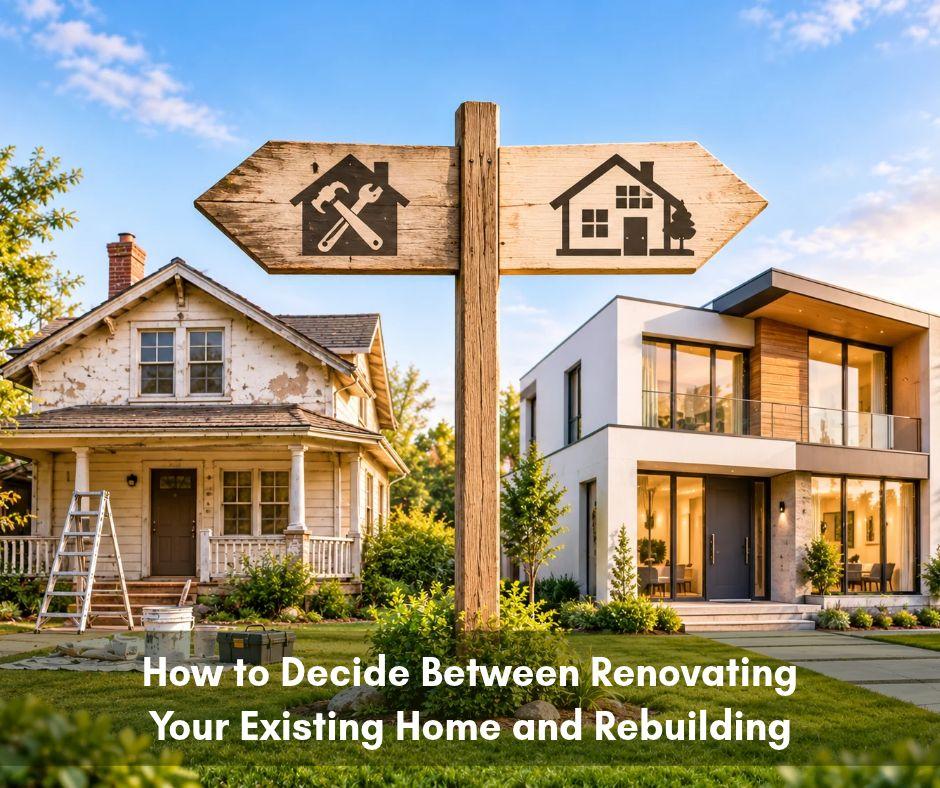
Deciding whether to renovate your existing home or rebuild it completely can be challenging. Both options have advantages, and the right choice depends on your home's condition, budget, space requirements, and future plans. If you are considering home construction services in Fairfield, CT, understanding the benefits of renovation and rebuilding can help you make a more informed decision.
Renovating can improve your current living space without starting from scratch, while rebuilding gives you the opportunity to create a home that better suits your lifestyle. Before making a decision, consider the following factors.
1. Evaluate the Condition of Your Existing Home
Start by checking the overall condition of your home. If the foundation, walls, roofing, and main structure are in good condition, renovation may be a practical option. However, if your home has major structural damage, outdated electrical systems, plumbing issues, or foundation problems, rebuilding may be worth considering.
2. Compare the Overall Costs
Budget plays an important role in this decision. Renovation may seem less expensive initially, but unexpected repairs, material changes, and additional work can increase the total cost.
Rebuilding usually requires a larger initial investment, including demolition and new construction. Compare the estimated costs of both options before deciding.
3. Consider Your Space Requirements
Think about whether your current home meets your family's needs. If you only need an updated kitchen, additional storage, improved bathrooms, or better room layouts, renovation may be enough.
If you need more living space, additional bedrooms, or a completely different floor plan, rebuilding may offer greater flexibility.
4. Think About Energy Efficiency and Modern Features
Older homes may have poor insulation, outdated windows, and inefficient electrical or heating systems. Renovation can improve these areas, but some limitations may remain.
Rebuilding allows you to include modern materials, energy-efficient systems, better ventilation, and updated designs from the beginning.
5. Consider Your Long-Term Plans
Your future plans should also influence your decision. If you plan to stay in your home for many years, choose the option that offers better comfort, functionality, and long-term value.
If the existing structure is strong and meets your needs, renovation can be a sensible investment. If it requires continuous repairs or cannot support your future requirements, rebuilding may be the better solution.
Conclusion
Choosing between renovating and rebuilding requires careful planning. Consider your home's structural condition, renovation costs, available space, and long-term goals before making a decision. A professional evaluation can help you understand which option makes the most sense for your property and budget.
Frequently Asked Questions
1. Is renovating cheaper than rebuilding a home?
In many cases, renovation costs less because the existing structure is retained. However, major repairs and hidden problems can increase renovation expenses.
2. When should I consider rebuilding instead of renovating?
Rebuilding may be a better choice when your home has serious structural issues, requires extensive repairs, or no longer meets your family's space requirements.
3. Can I modernize an old home through renovation?
Yes. You can update kitchens, bathrooms, flooring, lighting, insulation, and other features to make an older home more comfortable and functional.
4. Does rebuilding increase property value?
A well-planned rebuild can increase property value by improving the home's layout, functionality, energy efficiency, and overall condition.
5. Should I consult a professional before deciding?
Yes. A qualified professional can assess the existing structure, estimate renovation or rebuilding costs, and help you understand the most practical option.